



When I moved into a suburban row house for my second year of university, one of the first things I did, naturally, was hook up my hi‑fi system.
I don’t think I’d made it through the first song on Black Sabbath’s Paranoid before there was a frenzied banging on the front door downstairs. I quickly became acquainted with my new next-door neighbors, a slightly demonic middle-aged Salfordian couple. They weren’t fans of Black Sabbath, or of music in general, and they clearly weren’t happy about the fact that they lived next door to a student-rental property.
The walls separating them from me and my housemates were more like thin, useless partitions, providing no meaningful acoustic isolation. We discovered with consternation that any sound we made in our dwelling could, and often would, send our neighbors into a rage. They were on a hair trigger. It usually resulted in them banging on the walls or coming to our door to threaten us, not to mention enacting actual violence.
After a fruitless search for alternative living arrangements, it became clear that I was stuck in a seemingly untenable situation—which made for a very traumatic and stressful tenure. I spent as little time at the house as possible. So, despite having my own bedroom, I didn’t have a place to properly listen to music for that entire year. And that wasn’t the only time I’ve found myself in such a situation. Reality has a habit of getting in the way of one’s dreams.
A room of one’s own (with decent acoustics)
There is a certain type of photograph you have seen a hundred times, even if you have never consciously registered it as a genre. It features a large, neutral-toned room, beige or charcoal, with high ceilings and minimal furniture. Two loudspeakers stand at precise angles, forming an equilateral triangle with a single, vacant chair. There is usually no television. Sometimes there apparently aren’t even any cables. No dining table bleeding in from the side. No clutter, no children’s toys. The room exists for one thing only: the transmission of recorded music into the ears of an attentive, solitary person.
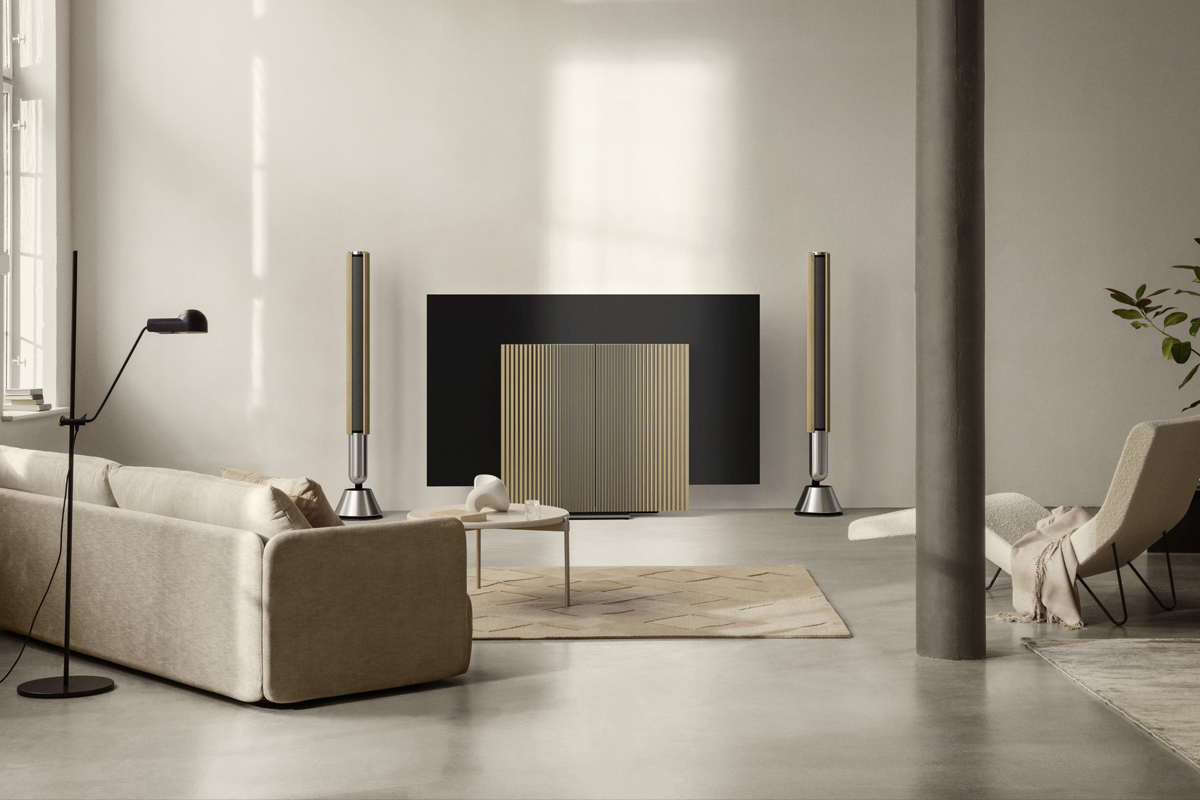
Images like this, repeated across decades of magazine spreads, YouTube tours, and forum profile pictures, have become the aspirational backdrop to serious listening. It is, in its way, a kind of fantasy, not merely of sound quality but of a certain kind of life. Unhurried. Uninterrupted. Location-agnostic. And for a growing number of people living in cities around the world, it is a fantasy in the most literal sense: something imagined precisely because it cannot be had.
To be clear, the dedicated listening room is a genuinely wonderful thing, and those who have built one deserve every note they get from it. This is not an argument against acoustic perfection. It is an attempt to ask what serious listening looks like when the room is no longer a given, when the architecture of modern urban life has quietly closed off options that older guides and forum orthodoxies still treat as prerequisites. And it is, perhaps, an attempt to help the conversations in hi‑fi circles become a little more honest about the assumptions buried inside their most basic advice.
The shrinking city
Cities are getting smaller for the people inside them, in terms of the square footage available to each resident. The numbers vary by city and survey methodology, but the trajectory is consistent. Average new-build apartment sizes in London have fallen considerably over recent decades, with many developments now offering units well below 50 square meters. Paris, never lavish with living space, has its own rich tradition of the sixth-floor walk-up, in which a single room serves simultaneously as bedroom, living space, and home office. Berlin’s celebrated Altbau apartments, large, light-filled, and high-ceilinged, are largely occupied, largely unaffordable, and not being replicated in new stock.
Against this backdrop, the advice that dominates audiophile discourse sometimes reads like dispatches from another era. Place your speakers at least 2–3′ (60–90cm) away from the nearest wall, with a seating distance 1 to 1.2 times the distance between the speakers, and/or ensure the listening chair sits at one-third of the room’s length from the back. Add absorption at the first reflection points on the side walls. Invest in proper bass trapping for the corners. All of this is technically sound advice. In a room where it can be applied, it yields real improvements. But it presupposes a room—a discrete, single-purpose space—that can be arranged around a stereo system without regard for the other functions of domestic life. It assumes that the speakers will not need to be situated next to the sofa where the children watch television, or in the corner of the bedroom where the desk has been wedged since 2020.
The pandemic did something lasting to the relationship between people and their homes. It collapsed the implied spatial categories inside urban apartments, the idea that home was primarily a place of rest, with work and culture largely happening elsewhere. Suddenly, and without warning, the home became everything: office, school, gym, restaurant, cinema, concert hall. Many of those functions have remained, even as external life resumed. The home office is now a permanent fixture for millions of workers. The second bedroom that might once have served as a listening room is now a workspace. Or it doesn’t exist at all.
What the forums don’t tell you
Hi‑fi culture has, for most of its modern history, been conducted amidst a tone of generous but unexamined privilege. This is not a political observation so much as an empirical one. The people who built the hobby, and who built its institutions, its magazines, its forums, its canon of received wisdom, tended to be men of a certain age, income, and domestic situation who had the space, the time, and the spousal acceptance to dedicate a room to their obsession. The advice accumulated from these experiences is generally extremely useful. But it is also shaped by conditions that do not apply to a large and growing proportion of people who care deeply about how music sounds.
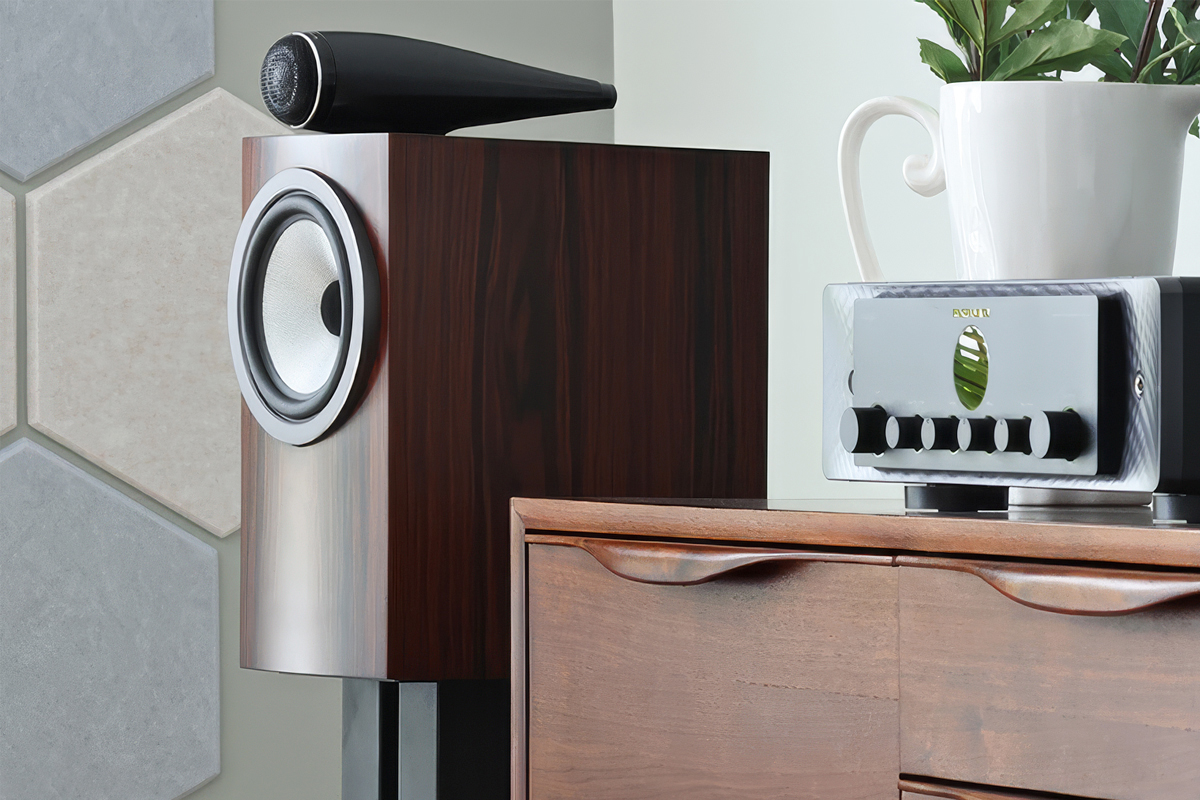
Browse online audio forums and you will find a peculiar double discourse. On one hand, endless discussion of equipment, cables, tweaks, and the finer nuances of treble extension. On the other, occasional plaintive posts from people in smaller dwellings, asking whether they can get good sound with speakers against the wall, or whether their L-shaped room will be manageable—posts that are met with responses ranging from helpful to gently condescending. “You really need to treat that room before thinking about new speakers.” “You can’t expect good results with those room dimensions.” The general message might be summarized as: proper listening requires proper conditions, and if you don’t have them, your path to fully appreciating the music is compromised from the start.
This is wrong, or at least incomplete in ways that matter significantly. It conflates the ideal with the only viable approach. And it discourages engagement by exactly the people who might otherwise bring new energy and perspectives to a hobby that is, in demographic terms, not in the fullest health.
Nearfield listening and the rehabilitation of compromise
The technology available to the city-dwelling listener has never been better, and some of the most interesting recent developments are particularly well-suited to constrained spaces.
Nearfield listening, the practice of sitting close to the speakers, typically within a meter or less, was once associated primarily with recording-studio control rooms.
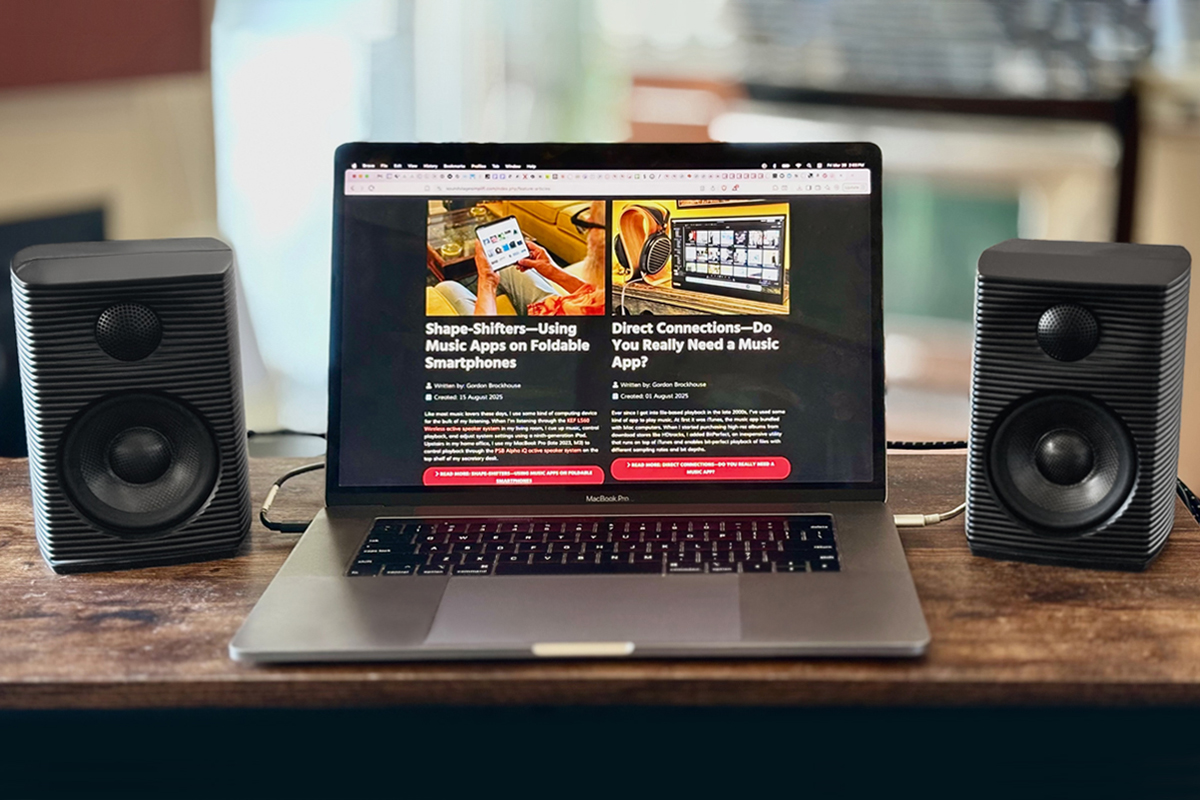
The reason is straightforward: when you sit close to the speakers, the direct sound dominates, and the acoustic character of the room matters less. The reflections from walls and ceilings that cause trouble with imaging at normal listening distances are still present, but they are proportionally lower compared to the direct sound, and your ear-brain system is better placed to discount them. Studio engineers have understood this for decades. The consumer market has been slower to follow.
The past five years have seen a notable proliferation of compact, high-quality active loudspeakers designed, whether or not they say so explicitly, for nearfield or small-room use. Manufacturers like Genelec, Kii Audio, and Dutch & Dutch have developed self-powered designs with built-in digital signal processing that actively compensates for room problems, including proximity to boundaries. Kii’s flagship design uses a controlled cardioid dispersion to reduce reflected energy, a clever engineering response to the real-world reality that speakers often end up close to walls, whether we want them to or not. Dutch & Dutch’s 8c and 6c loudspeakers are built around the same insight: that perfect placement is a fantasy for most listeners, so speaker design must work around that constraint rather than away from it.
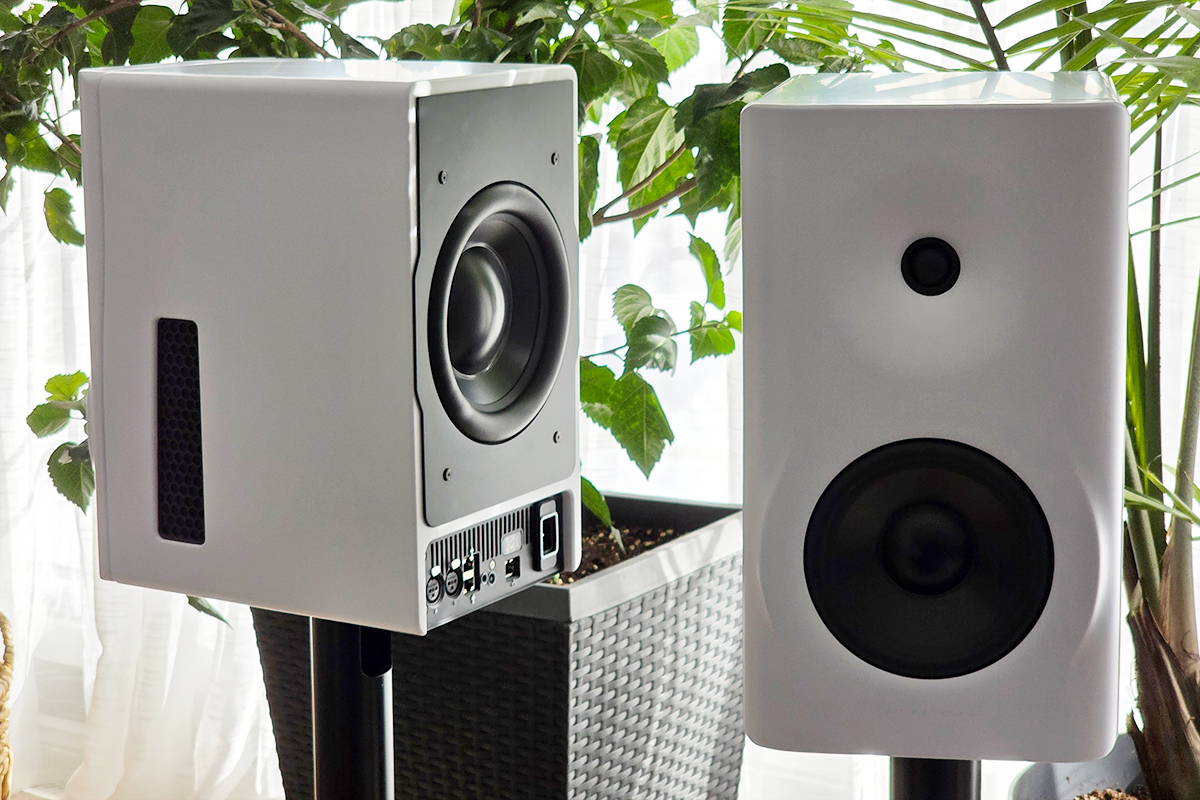
These are not inexpensive products. But the principle they represent, that the room is a problem to be addressed by the system rather than a precondition to be met before the system can work, is spreading across the market. Room-correction software and DSP-equipped amplification, once exotic, is now common even at moderate price points.
Lyngdorf has built its identity around the idea that digital correction can make a good speaker perform well in rooms that would otherwise be a compromise. Whether any of these technologies can substitute for a well-treated, well-proportioned room is a question on which even experts disagree. But the direction is clear: the industry is, slowly and sometimes grudgingly, acknowledging that the room most listeners actually have is not the room most advice recommends.
The headphone question
Then there is the option that audiophile culture has spent decades treating as a consolation prize, and that a younger generation of listeners has quietly elevated to a central practice: headphone listening.
The resistance to headphones in traditional circles is partly aesthetic. The stereo soundstage presentation of headphones, which usually place the stereo image inside the skull rather than out in front of the listener, is genuinely different from speaker listening, and many people find it less immersive or natural.

It is also partly tribal. Pairs of loudspeakers have been the totem of serious listening for as long as the pursuit has existed as a recognized pastime. The listening chair faces the speakers; the speakers face the chair; between them, the music happens. This spatial ritual matters to many listeners, and headphones are seen as a compromise in authenticity.
But headphones deserve to be taken seriously rather than apologetically. Headphones eliminate the effects of room geometry entirely. There are no reflections, no bass modes, no first-reflection problems. The full acoustic energy of the recording arrives directly at the listener’s ears. Spatial limitations are real; the resolution, detail retrieval, and timbral accuracy available from a pair of headphones are, at a given budget, usually superior to what a comparably priced speaker system can achieve in a typical urban room.
Manufacturers like Sennheiser, Audeze, and HiFiMan have spent recent years pushing headphone performance into new territory. Not to mention the massive R&D budgets being applied to this area by the likes of Apple, Harman, and Sony. The infrastructure around headphone listening—like dedicated amplifiers, DACs, and the ancillary market in sources and cables—has matured into something that takes the practice entirely seriously. Streaming platforms now increasingly release spatial audio mixes intended for headphone listening. The ecosystem is there. We’ve passed the cultural tipping point of treating headphone listening as a first-class practice rather than a fallback.
Headphone-oriented solutions are still very cumbersome when it comes to sharing experiences, though, so loudspeaker setups are clearly still needed.
Designing for the real room
Loudspeaker listening is wonderful and worth pursuing, even in imperfect conditions. The practical challenge is one of design thinking rather than pure acoustics. It requires asking the right question: not “How do I approximate the ideal room?” but “What is the best possible outcome in the space I actually have available to me?”
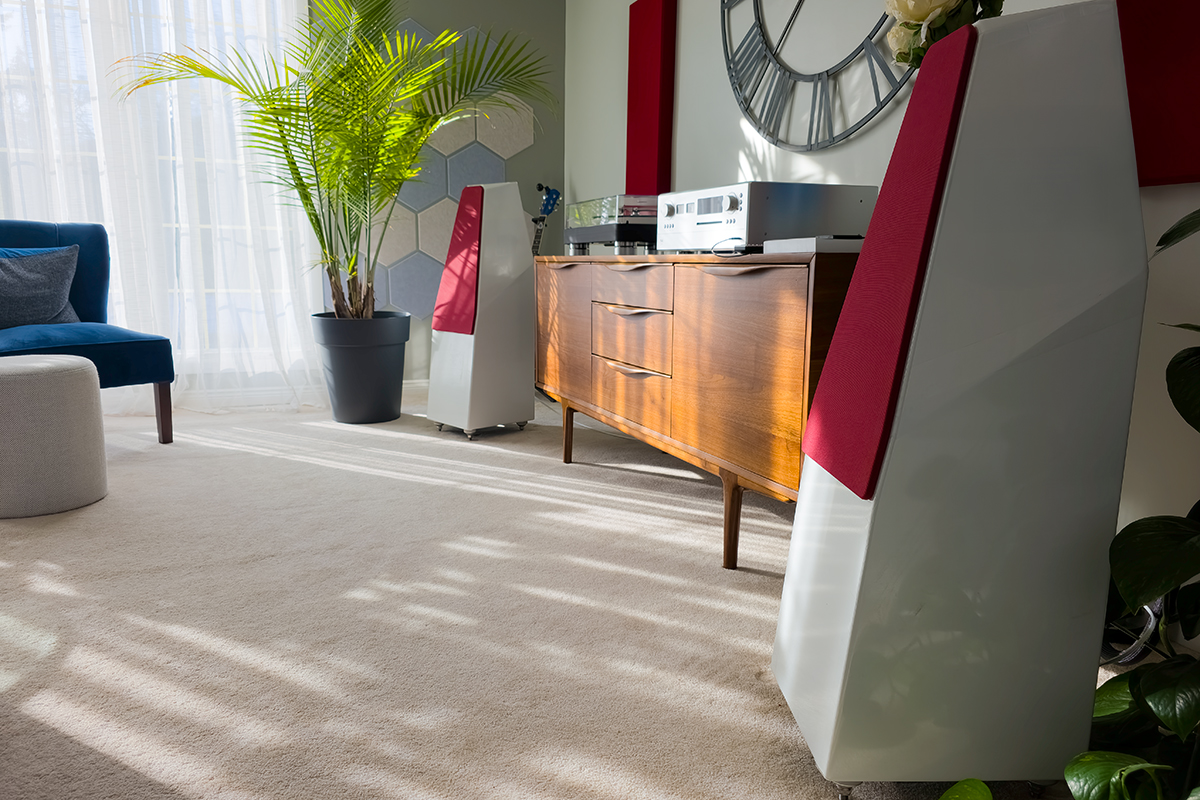
Nearfield placement, already discussed, is one answer. Another is a willingness to work with what is sometimes called lifestyle integration, the recognition that the listening space is also a living space, and that designing it well means serving both functions rather than sacrificing one to the other. Acoustic treatment does not have to be ugly. There’s a small industry in acoustic panels and diffusers that consider interior-design aesthetics: fabric-wrapped panels in carefully chosen colors or printed with custom artwork. The treated room and the liveable room are not as incompatible as conventional audiophile discourse sometimes implies.
Furniture matters too, and not only in ways you might expect. A well-stuffed sofa in the right position provides useful mid-frequency absorption. Bookshelves with an irregular arrangement of volumes of different sizes can add meaningful diffusion. These aren’t substitutes for purpose-built treatment, but they aren’t nothing, either. They are available to anyone with a living room and a desire to be creative and experiment.
After the room
There is a future for hi‑fi culture that is more interesting, more diverse, and more vital than the one that exists today, and it requires letting go of the dedicated room as an entry requirement. It at least requires an acknowledgement that the listening room is becoming an antiquated luxury concept and completely out of reach for many, many people all over the world. This doesn’t mean releasing the commitment to quality, but releasing the specific spatial fantasy that has structured the hobby’s self-image for so long.
In Tokyo, where the constraints of urban space are more acute than almost anywhere else, a rich culture of headphone bars and small-room listening has flourished for decades. The Japanese audio industry has understood for a long time that serious sound is achievable in compact spaces, and some of the most considered product design in the world has come from that understanding. The lesson doesn’t transfer directly—cultural and commercial contexts differ—but it is instructive. Constraint, met seriously and intelligently, produces ingenuity.
In other cities, the conversation is beginning to shift. Dealers in London and Berlin are showing systems designed for smaller rooms. Headphone listening and desktop nearfield setups are now taken more seriously, without the apologetic framing once attached to these topics. The hi‑fi community, which contains some of the most knowledgeable and passionate people in any area of consumer culture, is recognizing that its accumulated wisdom is most useful when it travels well, when it can be applied in a one-bedroom flat or a studio apartment, not only in a dedicated room in someone’s mansion.

For those who have a dedicated listening room, or who might one day have one, it remains a worthy aspiration. But it is time to stop treating it as the only legitimate context for serious engagement with recorded sound. Listening, it turns out, is something you can do almost anywhere, if you’re prepared to think clearly about what you have and what you want.
The most beautiful moment in any listener’s life will almost certainly have happened somewhere less perfect: in a cramped flat, late at night, or with the volume lower than they wanted because of, you know, real life. And it was enough. It was more than enough. It was, as those moments tend to be, everything.
. . . AJ Wykes