


Cambridge Audio is a brand I’ve long admired for its straightforward approach to audio-equipment design. Whether it’s earbuds, amplifiers, or active speakers, Cambridge products deliver consistently good build quality and performance, and the company also manages to keep prices at a reasonable level—something many other audio manufacturers seem to have a problem doing.
Another product category Cambridge has been active in over the years is network music streamers, and its latest offering along those lines is the Cambridge Audio CXN100 SE (US$1099, CA$1649, £899, €1049). An update of the CXN100, which was released in early 2024, the CXN100 SE sits below the EXN100 and the Edge NQ in the company’s streamer lineup.
The CXN100 remains an active offering from Cambridge Audio. So what’s different about the special-edition CXN100 SE? The main upgrade is the addition of an HDMI eARC input for connecting to a TV. There’s also a limited-edition black-finish version, which is the one I was sent for review. Otherwise, the CXN100 SE benefits from all of the regular CXN100’s latest software updates, a list that includes the addition of seven-band EQ, Amazon Music, Qobuz Connect, Spotify Lossless, and a VU-meter option for the unit’s front-panel LED display.
Features and description
The CXN100 SE ships with an IEC power cord, a control-bus cable, and two compact antennas for Wi‑Fi and Bluetooth. No remote control is included; all operations can be carried out either via the front-panel control buttons or with the Cambridge Audio StreamMagic app, though the company’s CX Series 2 remote control is available as an extra-cost option.
Apple AirPlay 2, Google Cast, Bluetooth, Spotify Connect, Tidal Connect, and Qobuz Connect are all supported by the CXN100 SE. Native streaming options available in the StreamMagic app add Amazon Music, Deezer, and QPlay to that list. Other options include internet radio, with the ability to store station presets, and UPnP streaming from network-attached storage. The CXN100 SE is also Roon Ready.
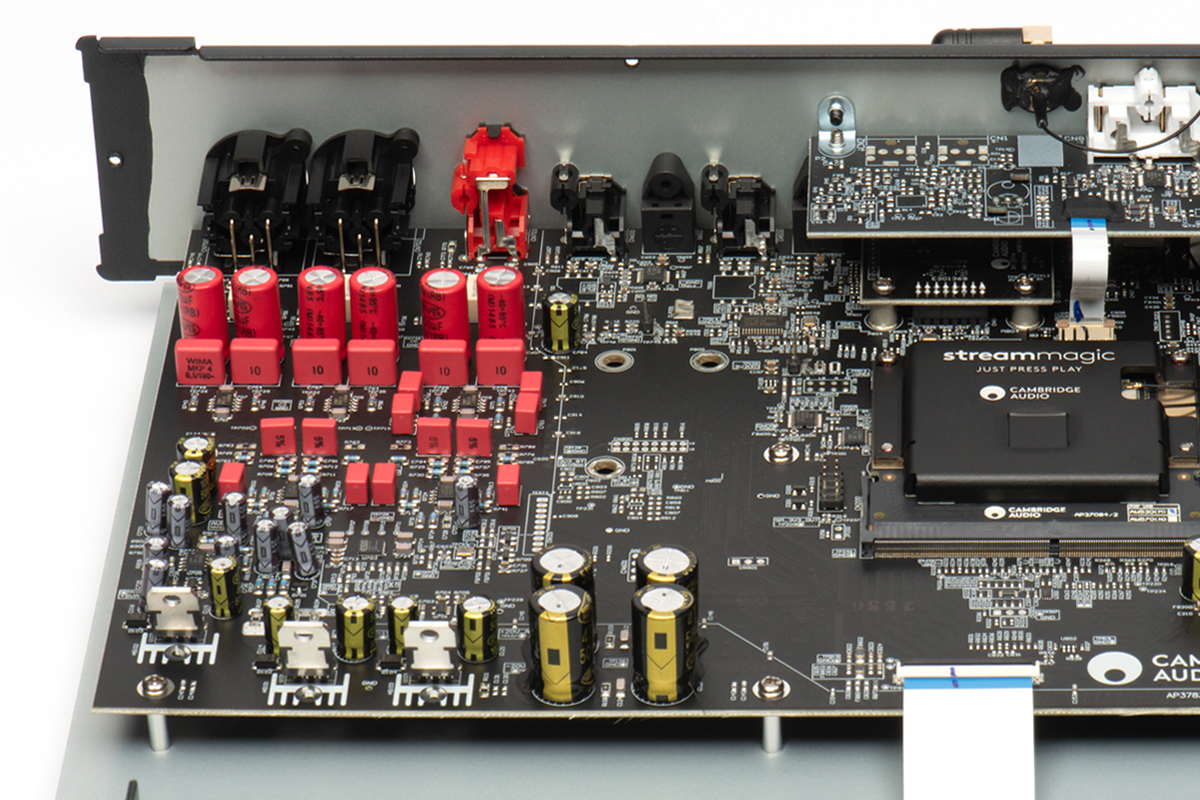
The CXN100 SE’s ESS ES9028Q2M Sabre32 DAC supports up to 32‑bit/192kHz hi-rez audio streaming over Wi‑Fi or ethernet. Resolutions up to 32/768 are supported for PCM data on the USB inputs, along with DSD up to x512. For UPnP, PCM up to 32/768 is supported. The S/PDIF inputs can accept DSD64 via DoP (DSD over PCM); the optical input will accept PCM to 32/96, and the coaxial S/PDIF will accept PCM to 32/192. Format support includes ALAC, WAV, FLAC, AIFF, WMA, MP3, AAC, HE AAC, AAC+, and OGG Vorbis, as well as DSS and DSF for DSD playback. The CXN100 SE can unfold and render MQA streams.
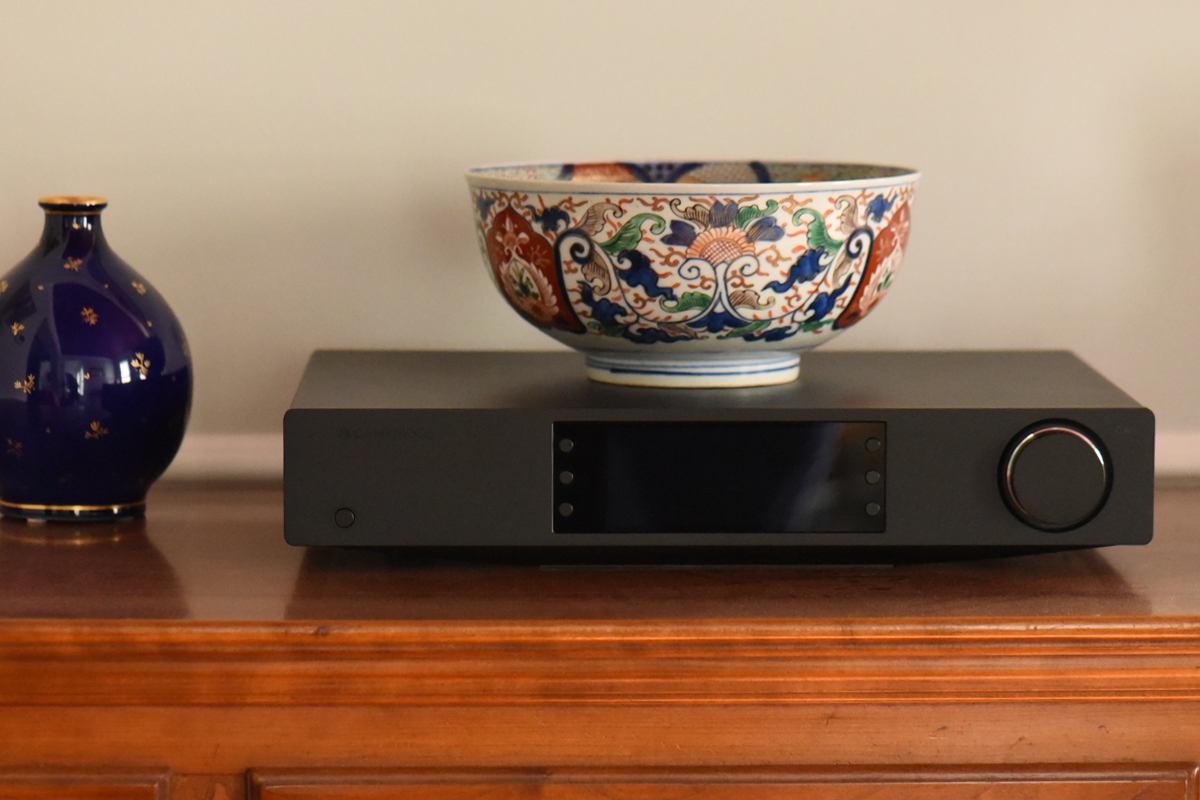
The CXN100 SE will soon be made available in a Lunar Grey finish, but I liked the look of my limited-edition sample, which matched the matte-black finish of the Oppo BDP-105 universal disc player I use for playing CDs and SACDs. With its sleek and well-constructed aluminum-and-steel chassis, the jet-black CXN100 SE is meant to match other components in Cambridge Audio’s CX Black series, which includes the CXA81 Mk II stereo amplifier and the CXC CD transport.
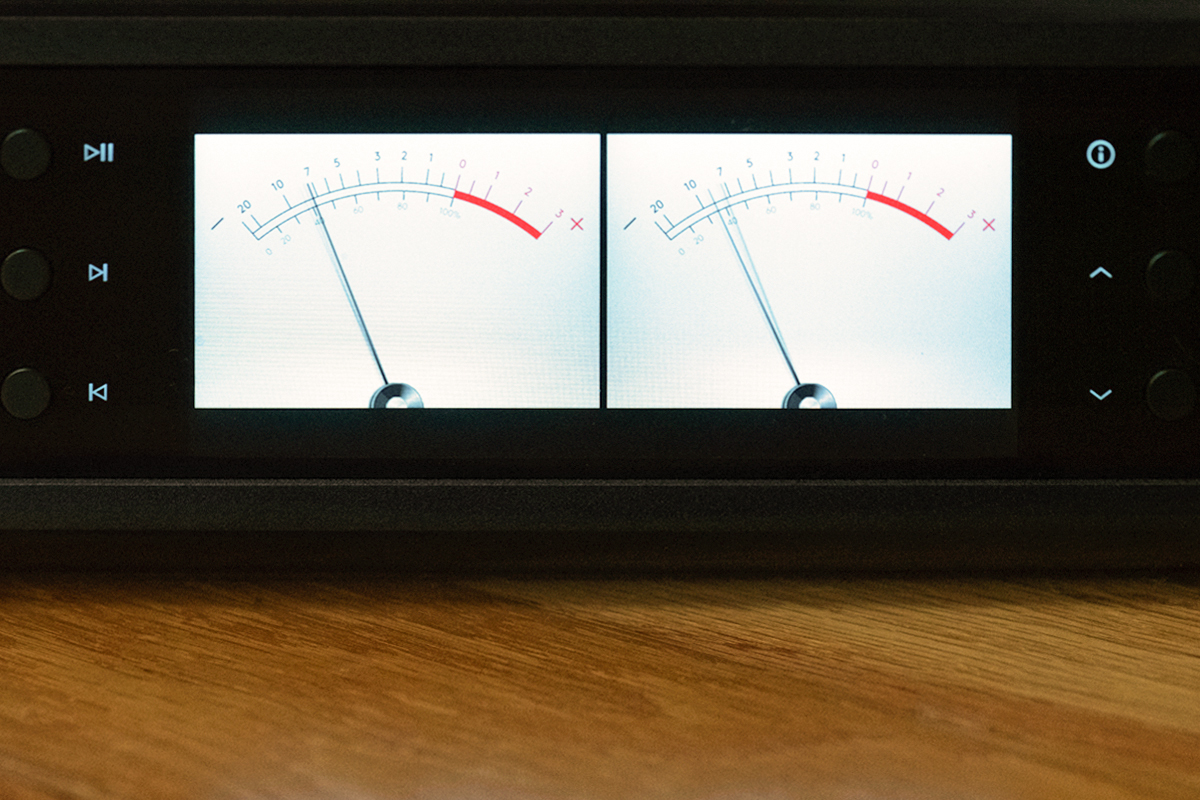
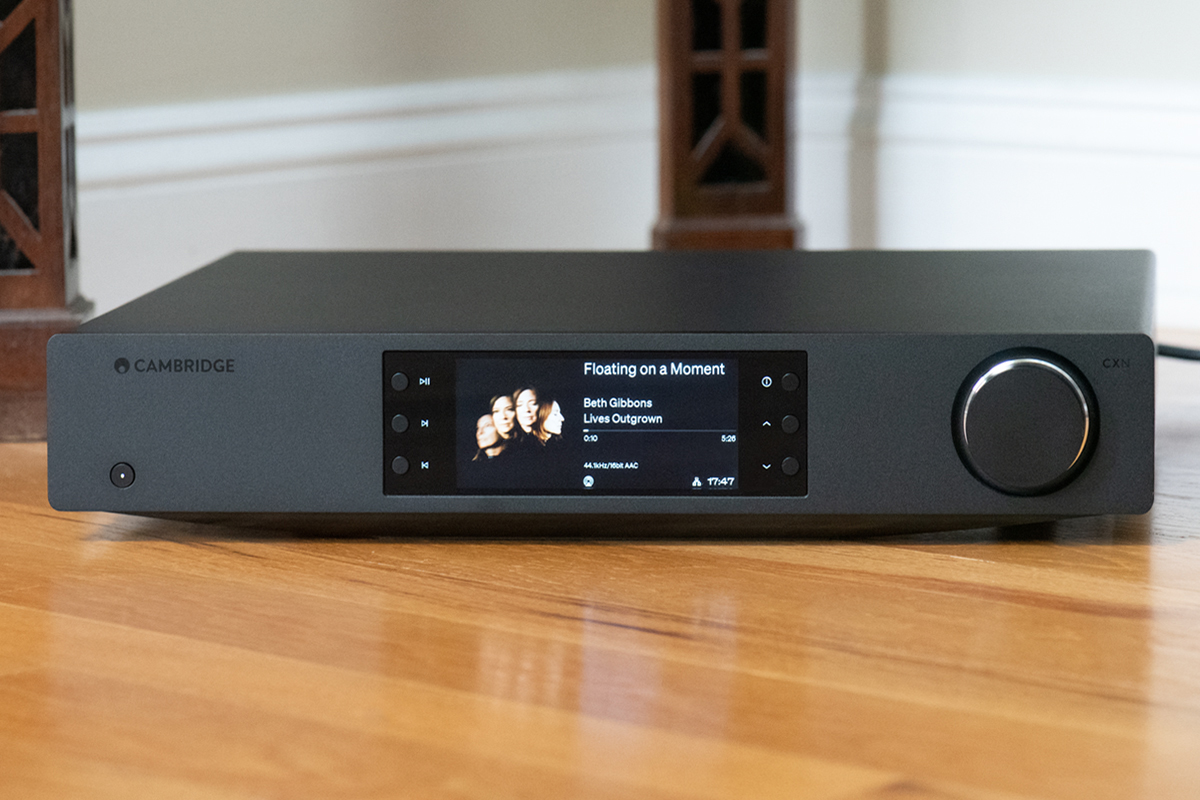
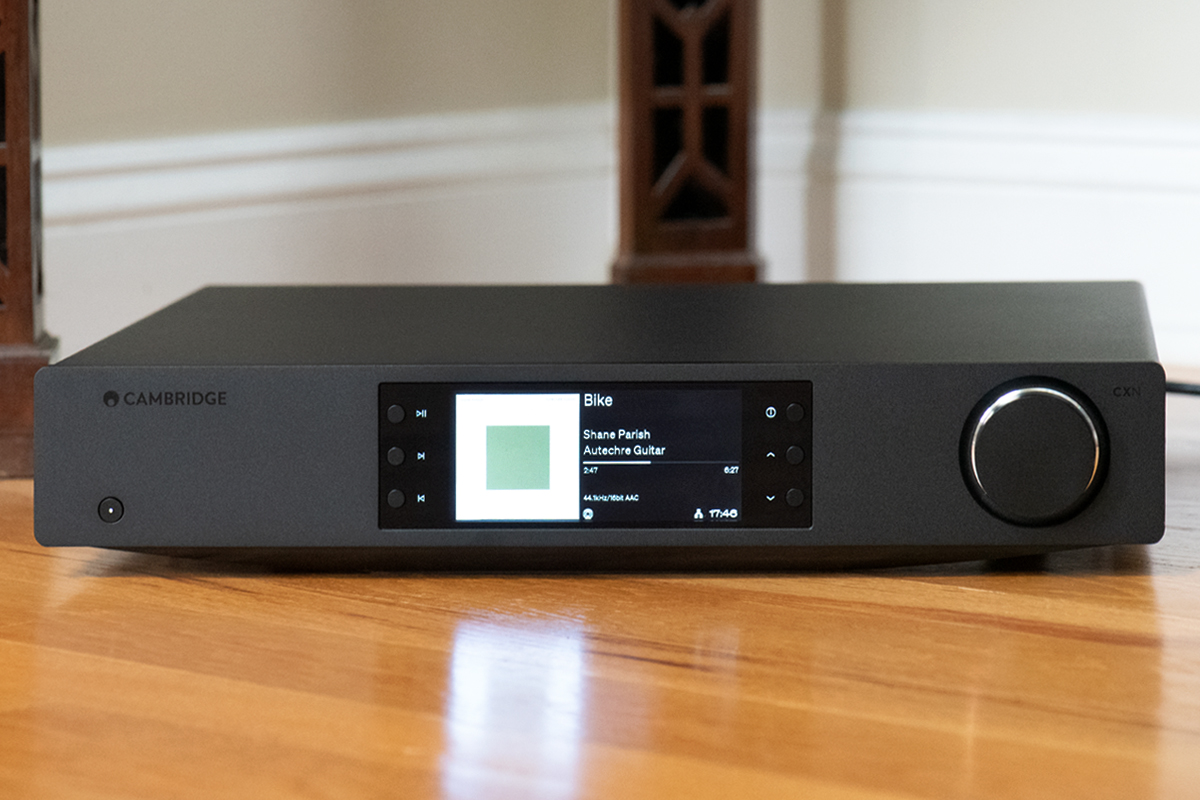
A large volume-control knob on the CXN100 SE’s front panel sits to the right of a 4.76″ color display. When streaming from Tidal Connect or other supported sources, this displays album art for the track you’re listening to, along with track title, artist, and album info. It also shows the streaming sample rate (or bitrate for internet radio), a track-playback progress bar, elapsed playback time, a clock, and network status indicators. A set of front-panel control buttons is used for the initial setup of the CXN100 SE (the Wi‑Fi connection, primarily) along with play/pause, skip track, and source-selection control. The Info button lets you cycle through various screen-display options, including a digital clock and multiple VU meters.
The HDMI eARC port may be a key selling point for this special-edition model, but there are plenty of other hardwired connection options to take advantage of. Along with optical (TosLink) and coaxial (RCA) S/PDIF audio inputs and outputs, there are both single-ended (RCA) and balanced (XLR) analog outputs. For data connections, there is USB‑A for media on storage devices, ethernet, and USB‑B for PC audio.
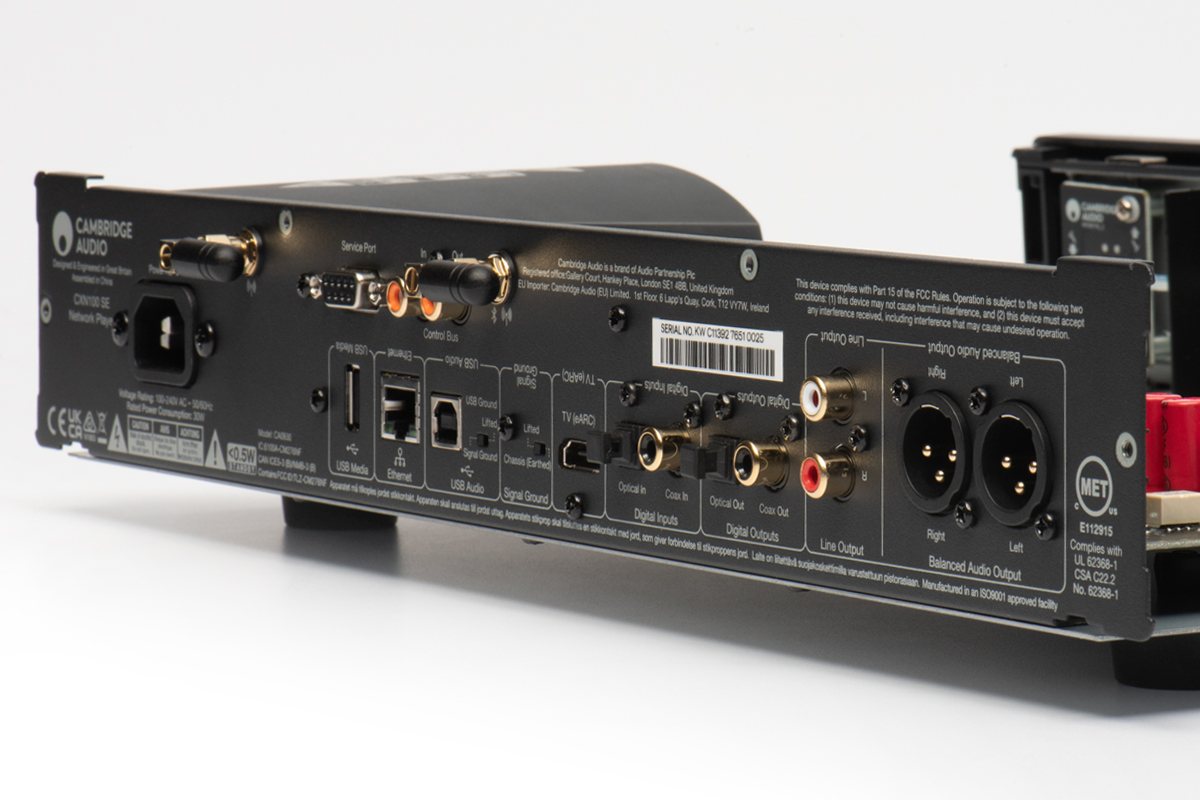
Rounding out the connections are RCA in and out for components that support Cambridge’s Control Bus for synchronized operation, an RS‑232 service port, and antenna inputs for Wi‑Fi and Bluetooth. There are also switches to lift the ground for the USB‑B input and the general chassis ground. Helpfully, labels for all connections are duplicated at the top in an upside-down orientation, which lets you easily read them when peeking at the back panel from above.
Setup
Before I set up the CXN100 SE in my main system, it first took a detour to my home-theater room so I could test the HDMI eARC function. After plugging the CXN100 SE in and connecting it to my TV’s HDMI eARC port, with an optical output to a Klipsch soundbar, I visited the Wi‑Fi settings menu on my iPhone, selected the Set Up New AirPlay Speaker option, and then selected the CXN100 SE. Once that was done, I downloaded the StreamMagic app to my phone from the Apple App Store.
Short answer to the question of whether or not HDMI eARC worked on the CXN100 SE: it did, and no further setup was required.
The CXN100 SE’s next stop was my living-room music system, where it was used as a digital preamp connected to a Hegel Röst integrated amplifier via its analog RCA outputs. Along with streaming, I used my Oppo BDP‑105 universal disc player for CD playback. My GoldenEar Bookshelf Reference X speakers were linked to the Hegel integrated amp using Nordost Purple Flare cables.
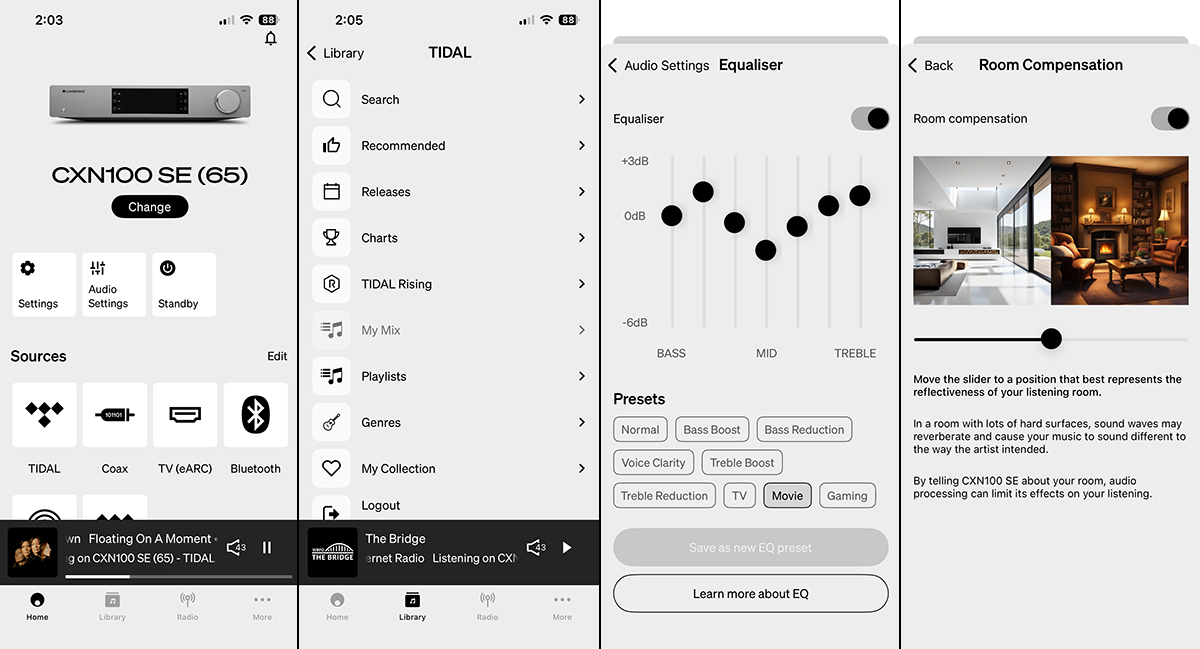
Cambridge Audio’s StreamMagic app has a clean layout and is simple to navigate. Most functions are located on the Home screen, where you can access settings and internet radio presets, select sources, and edit the source list. The Library screen lets you log into supported streaming services, as well as configure and browse any connected UPnP servers and USB storage devices. The Radio screen displays a library of internet radio stations, and it also has a search bar so you can locate specific stations to add to your presets list.
Options in the app’s Settings menu let you rename the device (something you may want to do for a multiroom setup), select an automatic power-down time, adjust display brightness, turn on preamp mode (which enables variable- rather than fixed-level output when using the CXN100 SE’s analog outputs), and set a volume limit for preamp mode.
The Audio Settings menu features a seven-band equalizer with multiple presets (bass boost, TV, etc.). There is also a Balance slider, plus a Room Compensation slider that lets you adjust the sound based on the area of reflective surfaces in your listening room. Since my own room has a fairly balanced level of reflective and absorptive surfaces, I chose to leave Room Compensation switched off.
For streaming, I mostly used Tidal Connect, which involves opening the Tidal app and selecting the CXN100 SE as a speaker endpoint. From there, you can hand things off to the StreamMagic app to control playback and adjust volume level. A Tidal (and Qobuz and Spotify) account can also be accessed natively within the StreamMagic app, but the library-browsing interface is more basic and limited compared to the regular Tidal app, which I preferred using.
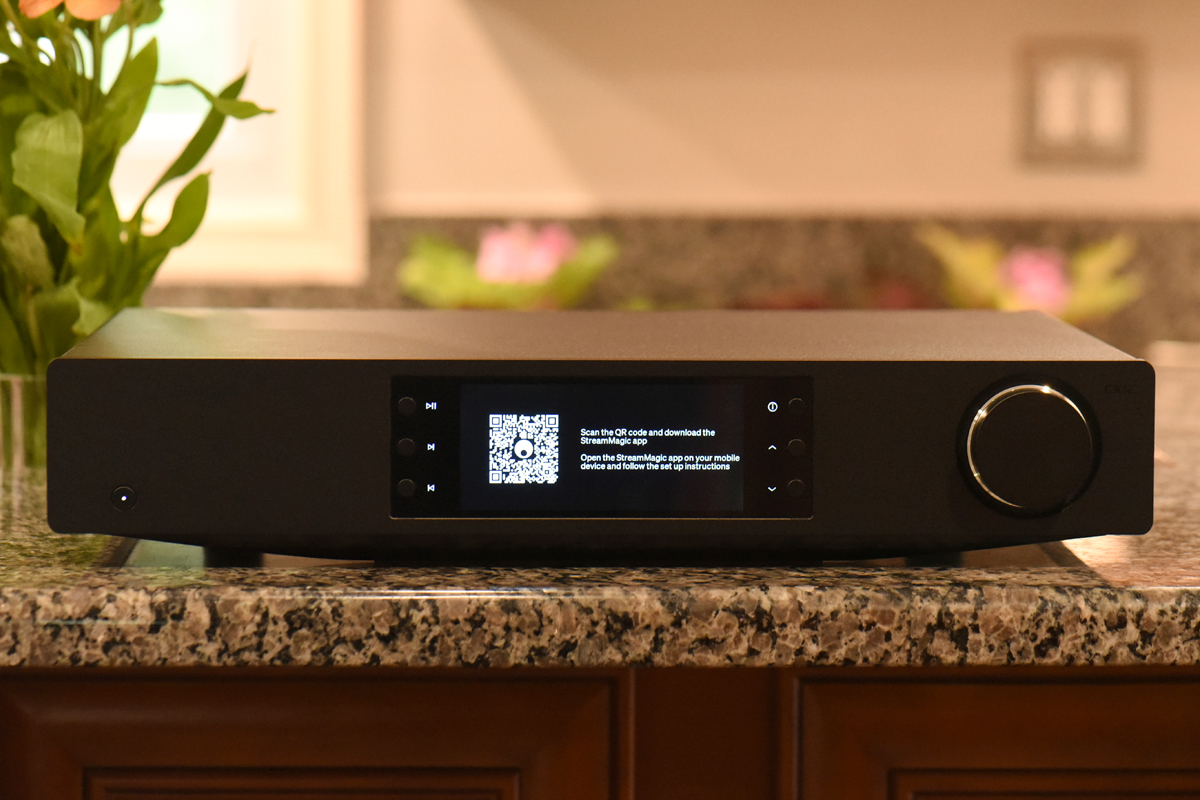
About the only streaming issue I had with the CXN100 SE was that it would sometimes default to AirPlay, and I would have to restart the unit and both the Tidal and StreamMagic apps in order to use Tidal Connect. No knocks on AirPlay, but the advantage of Tidal Connect, as well as Qobuz Connect, is that it lets you stream in hi‑rez format, whereas AirPlay generally tops out at 16/44.1 (CD quality).
The sound
Starting my listening with something stark and simple, I streamed Shane Parish’s acoustic-guitar rendition of British electronic duo Autechre’s “Bike” from Autechre Guitar (24‑bit/48kHz FLAC, Palilalia / Tidal). The crisp attack and resonant decay of Parish’s steel-string guitar was rendered with great clarity by the CXN100 SE, as were the awkward rests and shifting rhythms of an electronic-music track transcribed for acoustic guitar. Crucially, there was nothing flat about the sound; instead, there was a strong sense of a solo instrument existing in 3D space.
The CXN100 SE’s ability to present a detailed and lively sonic image could also be clearly heard when I streamed “Floating on a Moment” from former Portishead singer Beth Gibbons’s solo album Lives Outgrown (24/96 FLAC, Domino / Tidal). There are many layers to this track—which, paradoxically, manages to sound at once dense and frothy. Played through the CXN100 SE, Gibbons’s dry, delicate voice sat prominently in the mix, yet it blended smoothly with the wind instruments, percussion, and background chorus. The overall presentation was well-balanced, and it confirmed the Cambridge Audio streamer’s ability to successfully render challenging chamber-pop tracks.
Everything good I had heard so far from the CXN100 SE carried over to “Late Autumn” from guitarist Jeff Parker and his quartet’s The Way Out of Easy (24/48 FLAC, Nonesuch – International Anthem / Tidal). This slow-moving, propulsive track takes a long time to unfold (17 minutes and 20 seconds, to be exact), and it rewards careful listening. The Cambridge streamer did an impressive job balancing the reverberant distant-sounding drums and percussion with the more present and proximate guitar, stand-up bass, and saxophone, with the sax in particular sounding like it was literally in the room with me.
Comparisons
To get a handle on the CXN100 SE’s performance relative to other budget hi‑fi components, I did a two-part comparison. For sound, I compared it to the DAC in the Hegel Röst (discontinued, US$3000 when available). I connected my Oppo disc player’s coaxial S/PDIF output to the Cambridge streamer’s coaxial input, and connected the streamer’s analog outputs and its coaxial S/PDIF output to the corresponding inputs on the Hegel amplifier. Playing CDs as a source, this arrangement allowed me to easily switch between the CXN100 SE’s and the Röst’s DAC sections.
Playing Mazzy Star’s “Flowers in December” from Among My Swan (Capitol Records CDP 7243 8 27224 2 7), the Cambridge’s presentation nicely balanced the crisp sounds of the snare-drum rim and tambourine hits with the warmer sounds of the bass and acoustic guitar. The Hegel’s DAC brought out better definition of transients, however, and had a slightly livelier overall sound.
The differences between the two were less apparent on Ray LaMontagne’s “Barfly,” from Till the Sun Turns Black (RCA 82876 83328 2). I thought the guitar solo in the song’s outro was a bit more vivid spatially through the Cambridge DAC, but both DACs did an excellent job conveying details such as the papery texture of the softly sung vocals and the brushed snare drum.
“The Water Is Wide,” from Charles Lloyd’s CD of the same name (ECM Records ECM 1734), also sounded great with both DACs. There was a smooth yet detailed quality to Lloyd’s tenor-sax solos, and Brad Mehldau’s piano had a relaxed, liquid quality. I could also easily hear Lloyd’s slight muttering in the background between solos, a detail I’m always on the lookout for when listening to this track.
For streaming, I compared the StreamMagic app with the app used to control my WiiM Pro network streamer (US$149, CA$219, £149, €179). The WiiM Pro has a very basic feature set, and I primarily use its coaxial digital output to feed the Röst, which has a significantly better-sounding built-in DAC. The WiiM Pro has a full-featured app, however, and native support for Tidal, Qobuz, and Spotify. The WiiM Pro is also Roon Ready, and it supports AirPlay and Google Cast.
The WiiM Pro app supports basically every streaming service you’d want short of Apple Music, and it’s well-organized, easy to navigate, and also features presets for internet radio stations. I actually liked using it better than the Cambridge StreamMagic app, which is pretty impressive considering the WiiM Pro’s cheap price.
Conclusion
Special-edition products aren’t always worth the extra cost, but in this case the Cambridge Audio CXN100 SE is priced the same as the regular CXN100: US$1099. For that money, you get a well-featured streamer with HDMI eARC and a black-finish option added.
If you’re looking for a solidly built, great-sounding component to add wired and wireless network streaming to your hi‑fi or home-theater setup, the CXN100 SE is easy to recommend. There are plenty of other streamers that do exactly the same job as the CXN100 SE but cost quite a bit more.
There are, of course, streamers that cost quite a bit less—the US$149 WiiM Pro, for instance. For this review, I used the CXN100 SE in its preamp mode as a digital preamp, which is a use case where it shows its value. I was happy with the CXN100 SE’s performance as it served this role in my system, and if you plan to employ it in a similar manner, I’m fairly certain you will be, too.
. . . Al Griffin
Associated Equipment
- Integrated amplifier: Hegel Music Systems Röst
- Loudspeakers: GoldenEar Bookshelf Reference X
- Digital sources: Oppo BDP‑105 universal disc player, WiiM Pro streamer
- Speaker cables: Nordost Purple Flare
- Analog interconnects: Nordost Purple Flare (RCA)
Cambridge Audio CXN100 SE streaming preamplifier
Price: US$1099, CA$1649, £899, €1049
Warranty: Two years, parts and labor
Cambridge Audio Headquarters
Gallery Court
Hankey Place
London
SE1 4BB
United Kingdom
Phone: +44 (0) 20 7940 2200
Website: www.cambridgeaudio.com